

The tapestries depicting the Acts of the Apostles by Raphael, formerly owned by Cardinal Mazarin
Inspired by Raphael’s celebrated Acts of the Apostles, the tapestries of the Galleria Nazionale delle Marche tell a remarkable story of artistic excellence, collecting and European weaving traditions spanning centuries.
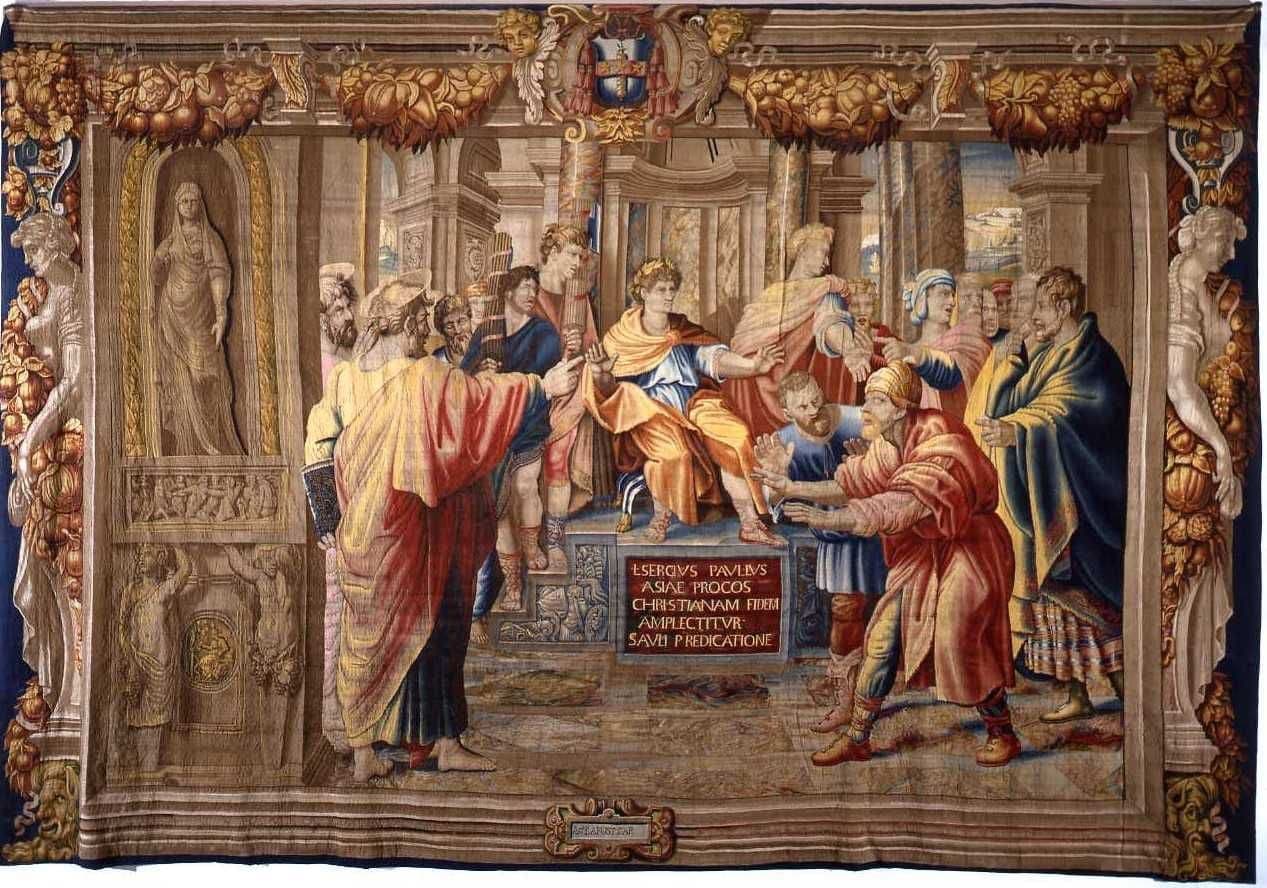
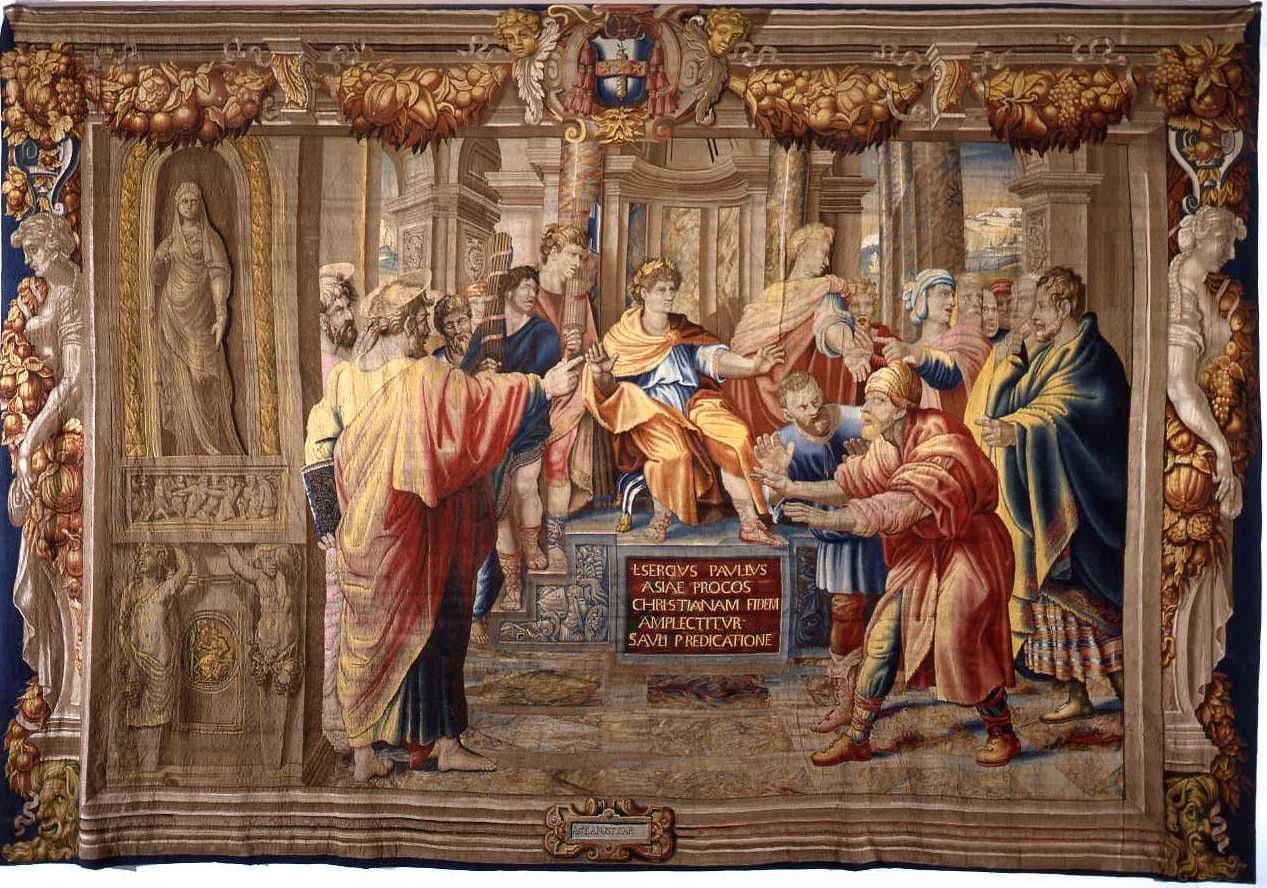
The seven tapestries now in the Palazzo Ducale of Urbino, formerly belonging to Cardinal Jules Mazarin (1602-1661), are a replica of the celebrated cycle of hangings commissioned from Raphael Sanzio by Pope Leo X de’ Medici in 1515-16 for the Sistine Chapel in the Vatican. The Urbino set is however incomplete, and is made up of pieces of English and French manufacture with a highly complex collecting history. The compositional schemes faithfully reproduce Raphael’s cartoons, now
in the Victoria and Albert Museum in London, and render with the utmost refinement the chiaroscuro qualities of the Urbinate’s painted models, with exquisite detail and colours still today vivid and lustrous.
The Healing of the Lame Man, the Preaching of Saint Paul at Athens and the Sacrifice at Lystra were acquired by Cardinal Mazarin between 1651 and 1653 from the English republican government of Oliver Cromwell, which had put the royal collection up for sale. They were part of a set of the Acts woven at Mortlake after designs by the cartoonist Francis Cleyn (1582-1658), copied from Raphael’s cartoons that had reached England in 1623. They had originally been commissioned by Philip Herbert, fourth Earl of Pembroke, for his seat at Wilton House in Wiltshire. The initials “SIP” refer to Sir James Palmer (1585-1658), director of the Mortlake manufactory in the 1630s and 1640s, under whose supervision they were made.
To complete the set, Mazarin ordered seven new hangings from the French tapestry-weaver Jean Lefebvre (1621/22-1700), who from 1655 had his workshop at the Louvre. In making the panels, the borders of the English tapestries were reproduced, with Mazarin’s arms substituted for those of the Pembroke family; Flemish tapestries of very fine quality were used as cartoons. The ten Anglo-French tapestries were left by the cardinal in his will to his nephew Filippo Mancini Mazzarino (1641-1707), on condition that they be transferred to Rome, to the family palace on the Quirinal.
In 1750 the complete set was bought by Count Gian Luca Pallavicini, governor of Lombardy on behalf of Austria, to furnish his Milanese residence, the Regio Ducal Palazzo (later Palazzo Reale). In 1753 he sold all the tapestries to the Viennese court for eighty thousand florins, to furnish the palace, but by the end of the nineteenth century the Vision of Ezekiel, the Stoning of Saint Stephen and the Conversion of Saint Paul were missing. The others remained at the Palazzo Reale until 1922, when by decree of the Ministry of Public Instruction they were transferred to the Galleria Nazionale delle Marche under the directorship of Luigi Serra, so that Urbino might display one of the masterpieces of the Urbino master most widely known and most frequently replicated throughout Europe.
Discover the works
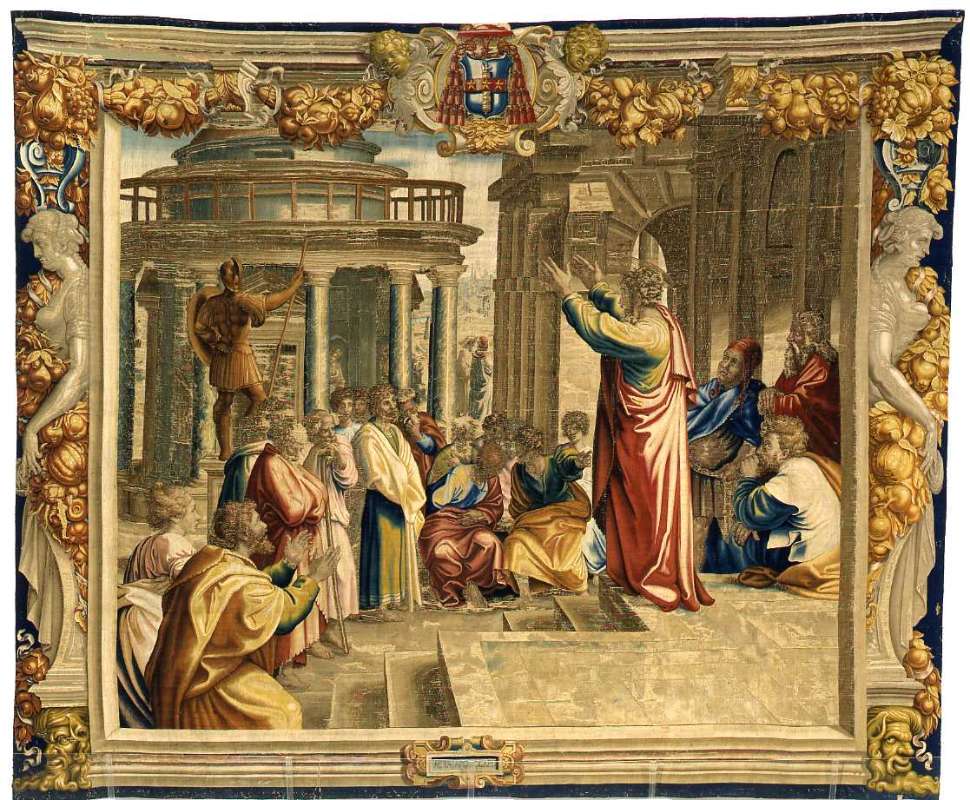
Predica di san Paolo ad Atene
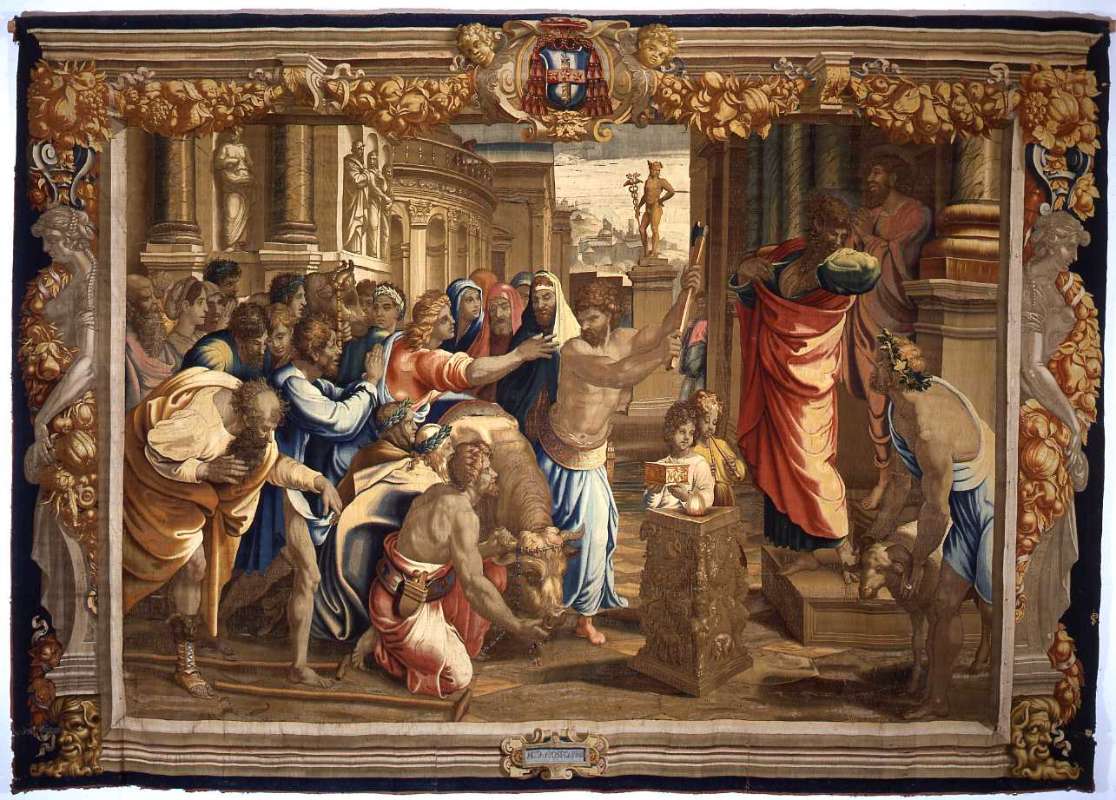
Il sacrificio di Listra

Pesca miracolosa
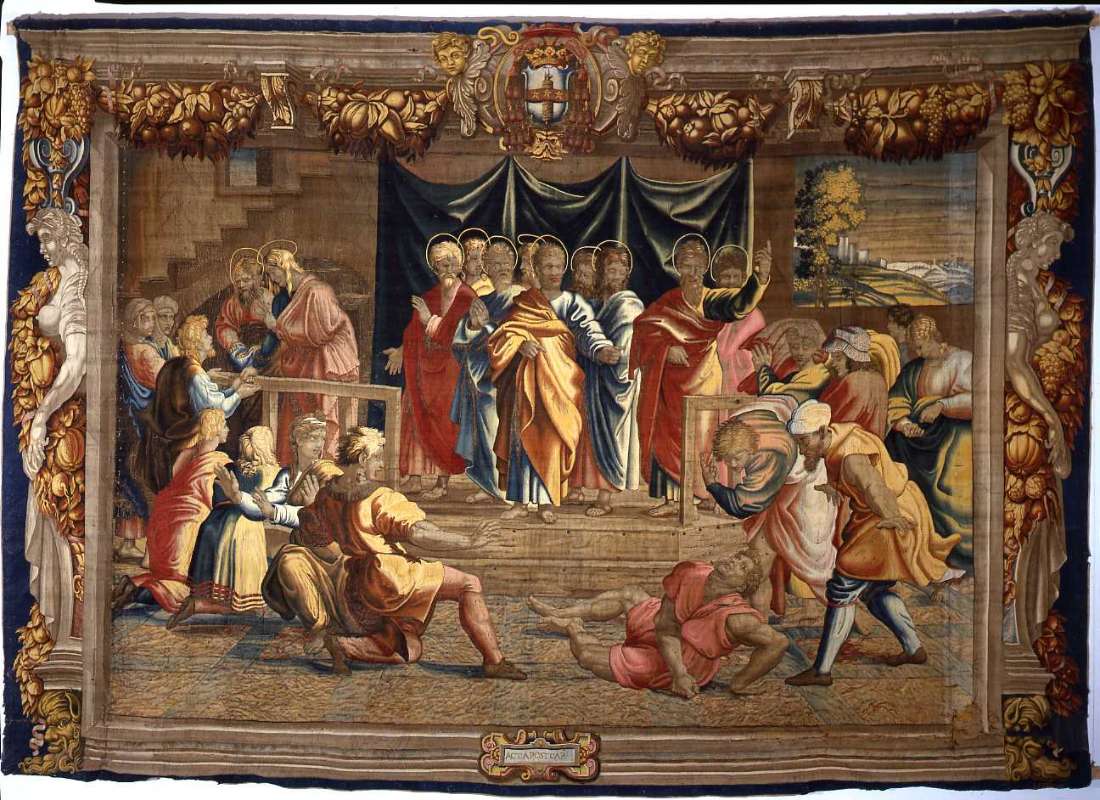
morte di Anania
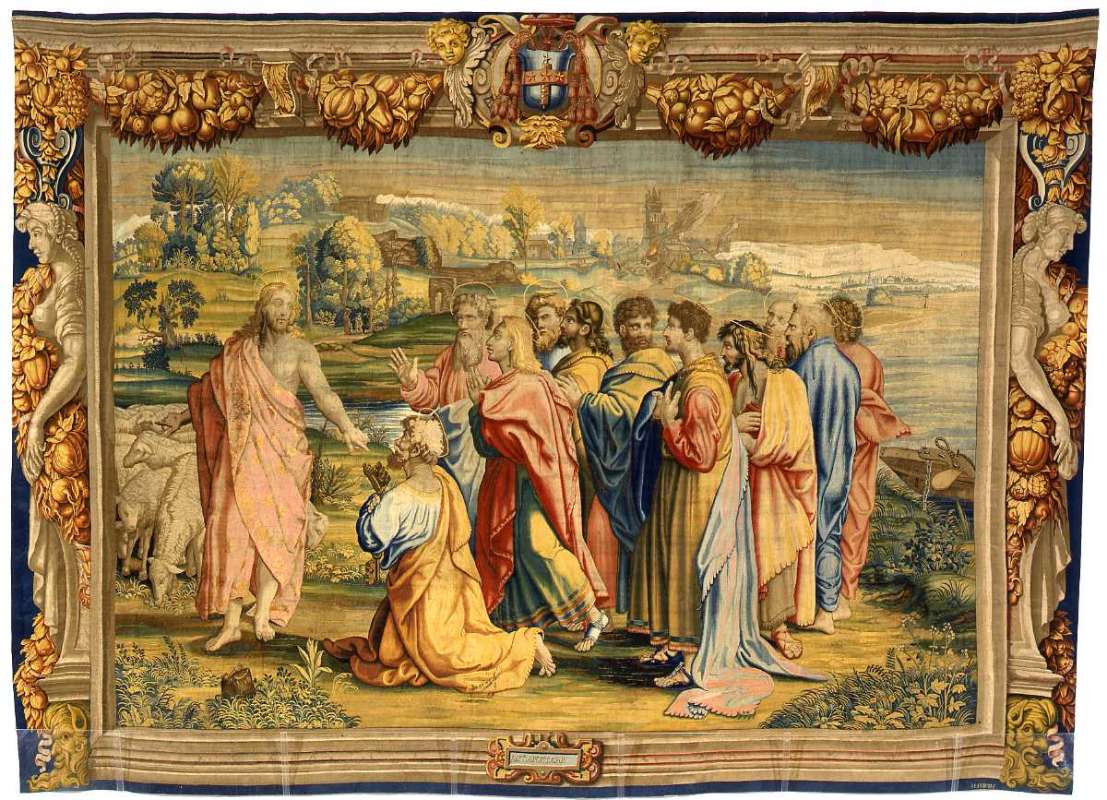
Pasce oves meas (o Consegna delle chiavi)
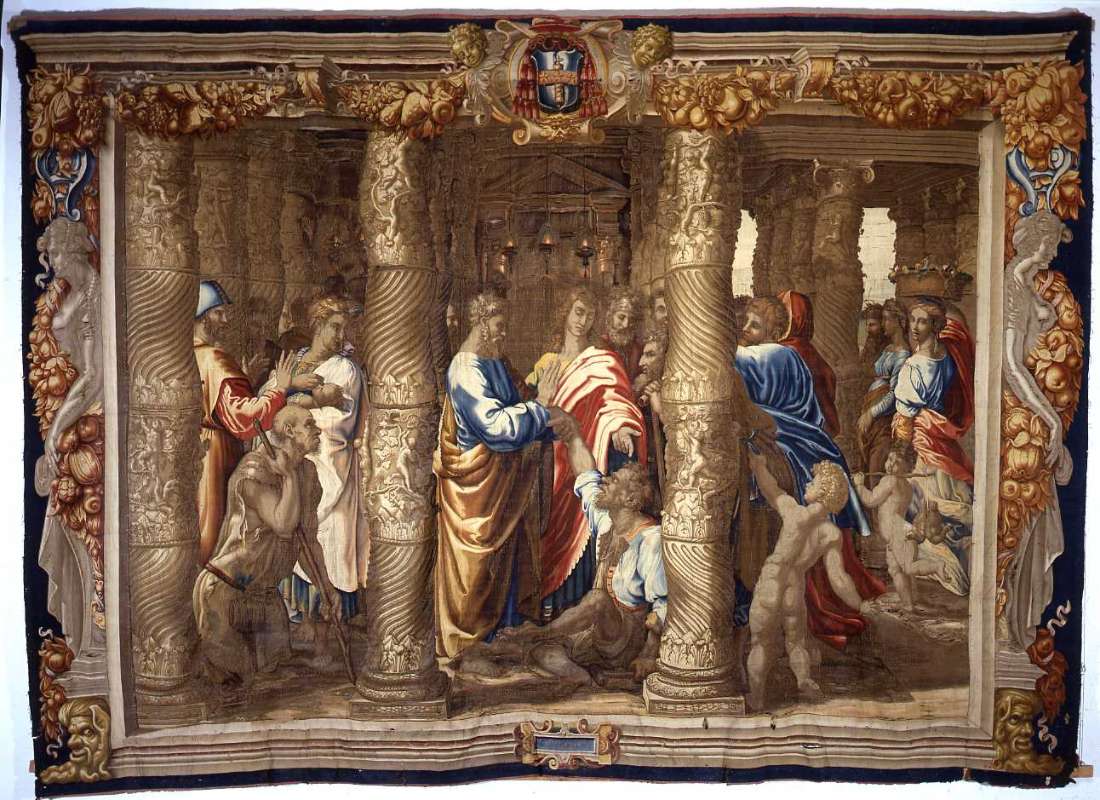
La guarigione dello storpio
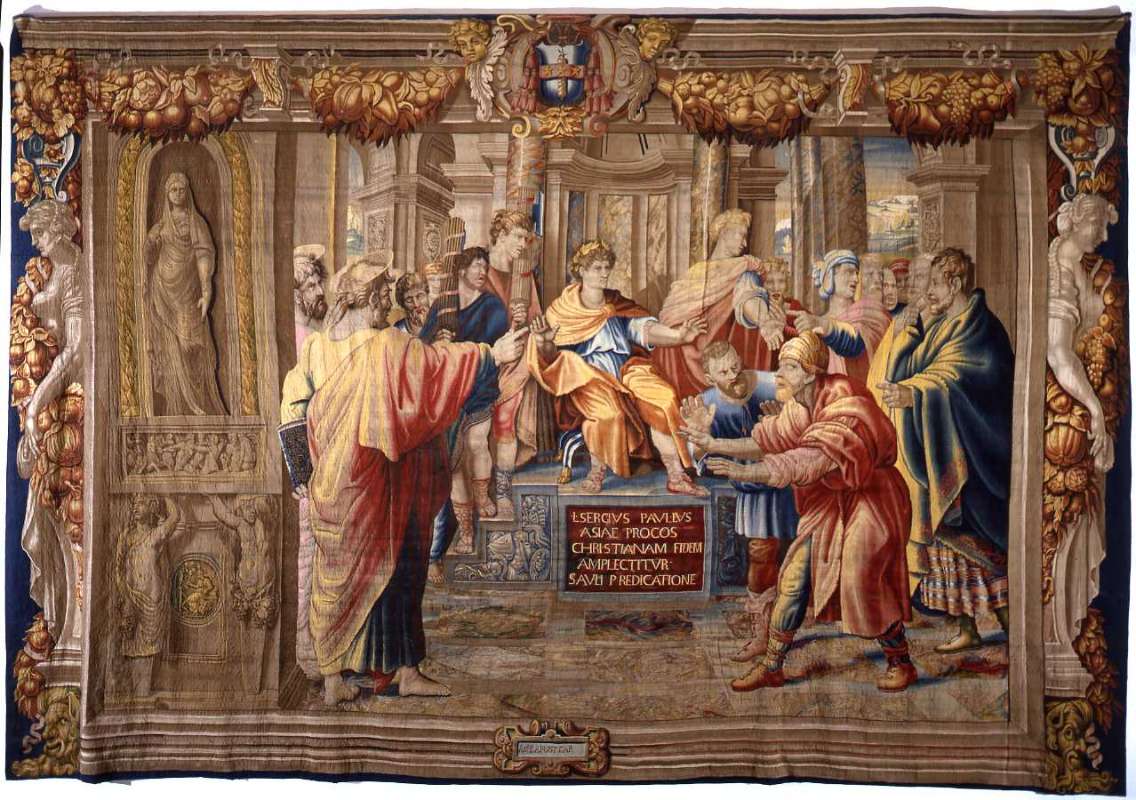
Accecamento di Elima (o Conversione del proconsole)
You might also like
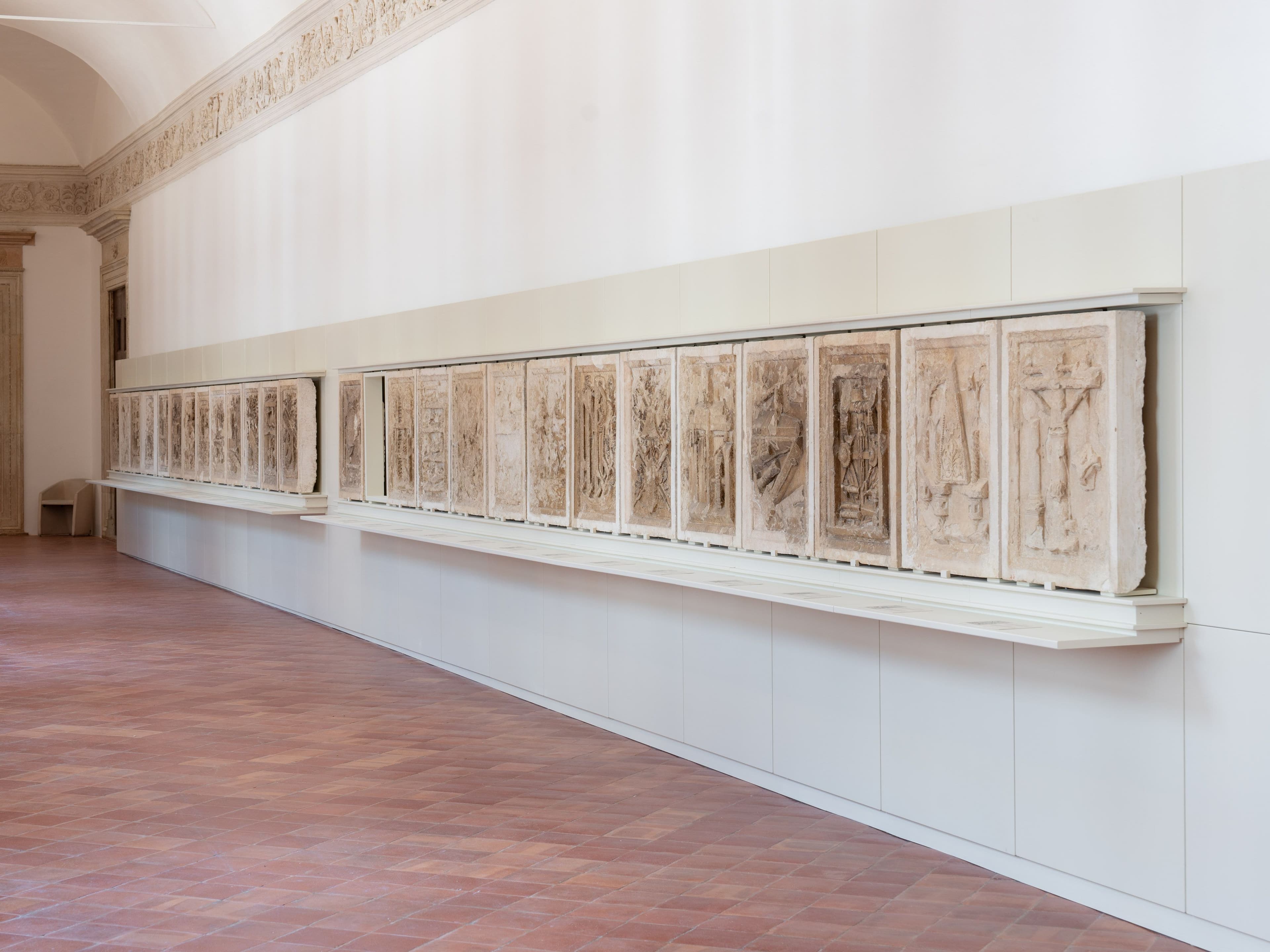
The ‘Art of War’ frieze of the Ducal Palace in Urbino
Discover more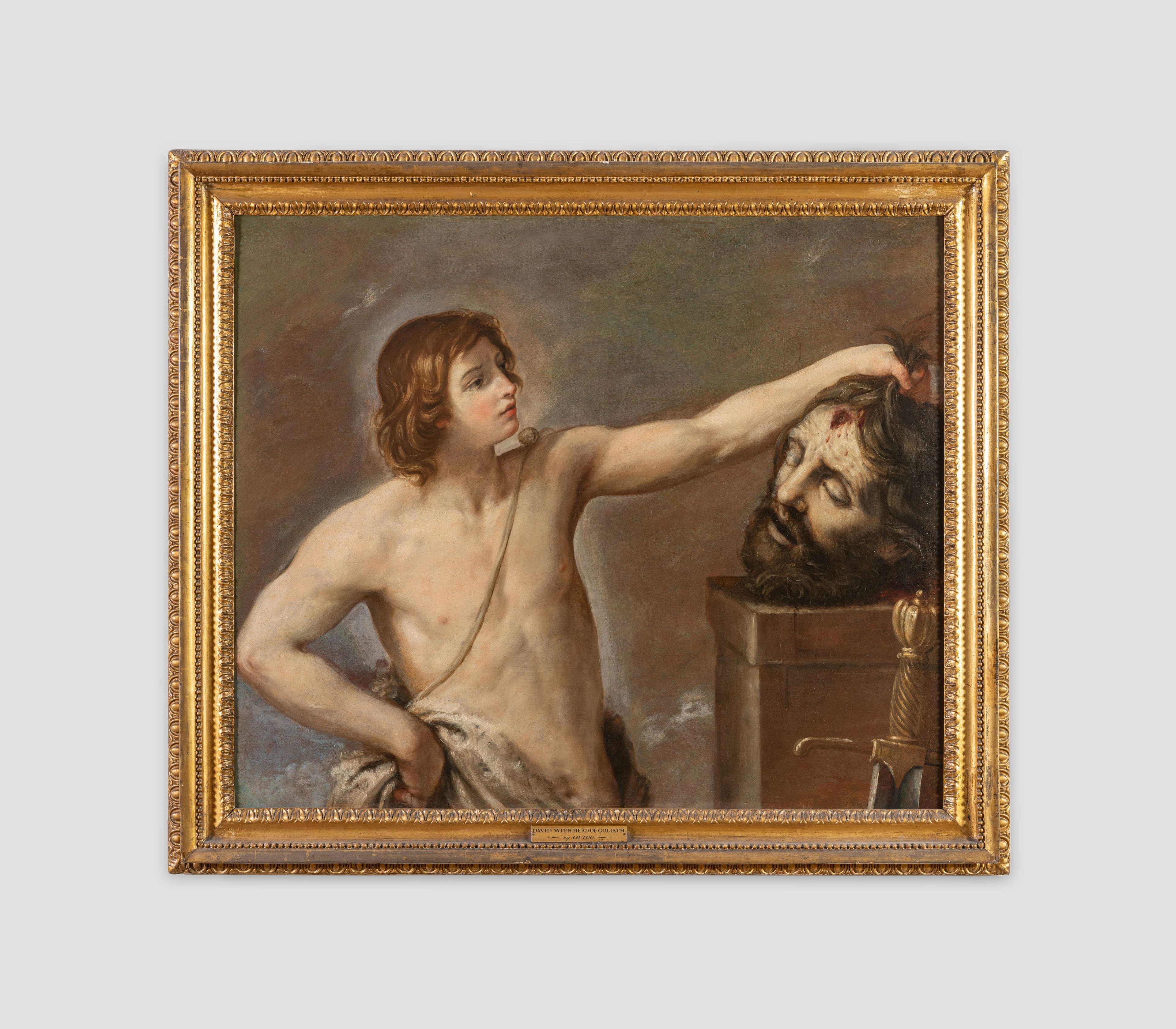
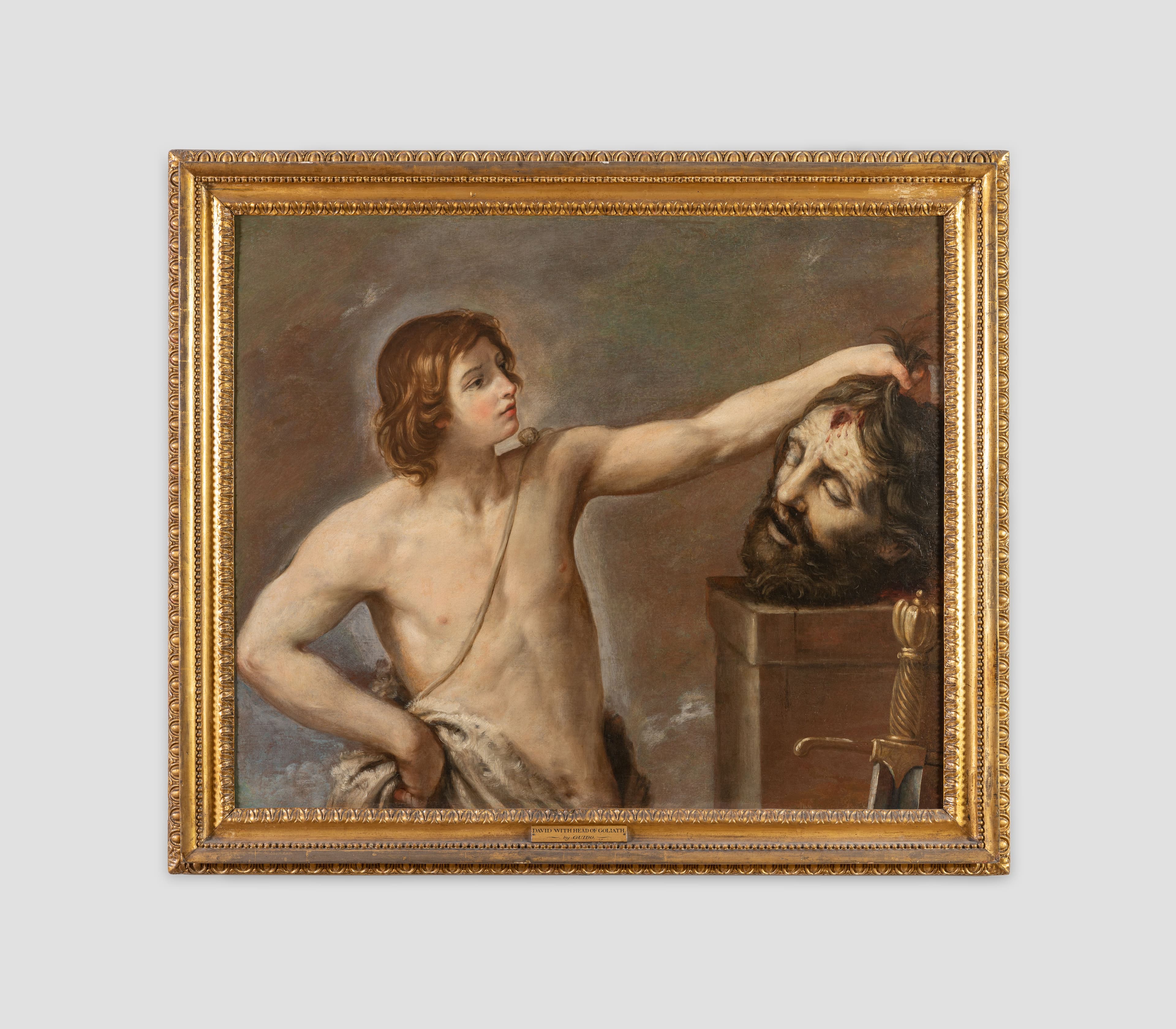
The Volponi Collection
Discover more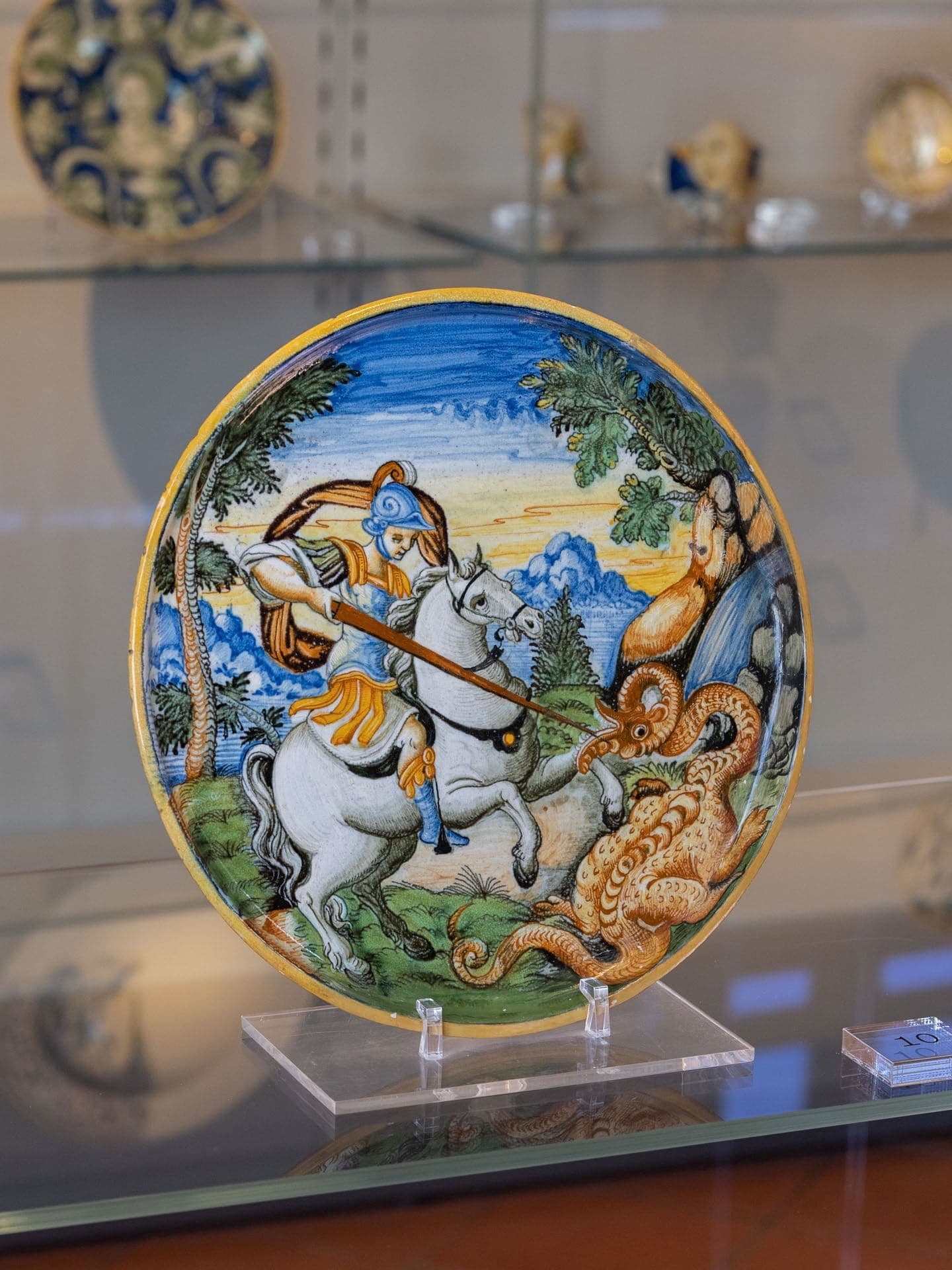
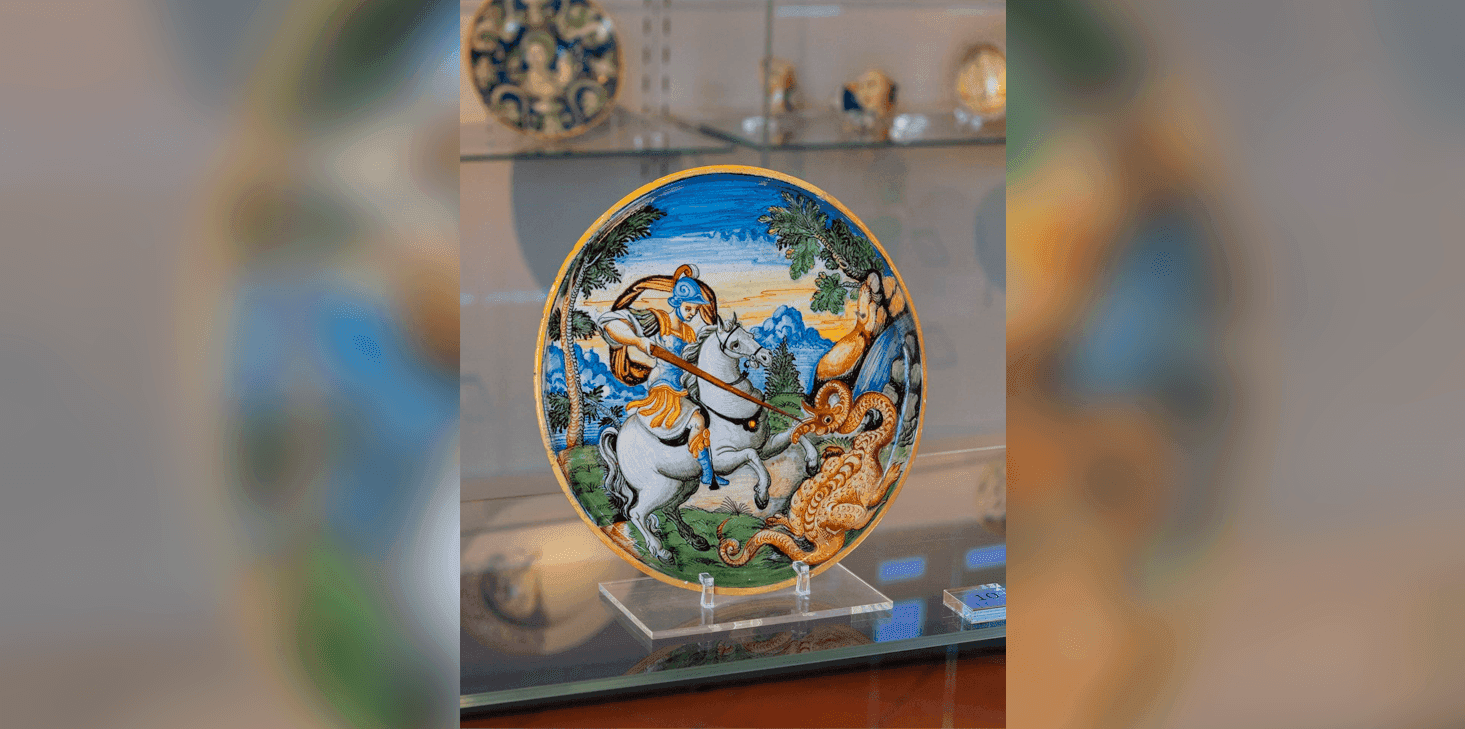
The majolica of the Galleria Nazionale delle Marche
Discover more
The Mauruzi Bequest
Discover more
The Prints and Drawings Collection of the Galleria Nazionale delle Marche
Discover more
The Viviani bequests
Discover more