

The ‘Art of War’ frieze of the Ducal Palace in Urbino
Seventy-two bas-reliefs between Vitruvian science and military power: the decorative programme of the winged facade commissioned by Federico da Montefeltro, now in the mezzanine galleries of the Piano Nobile.
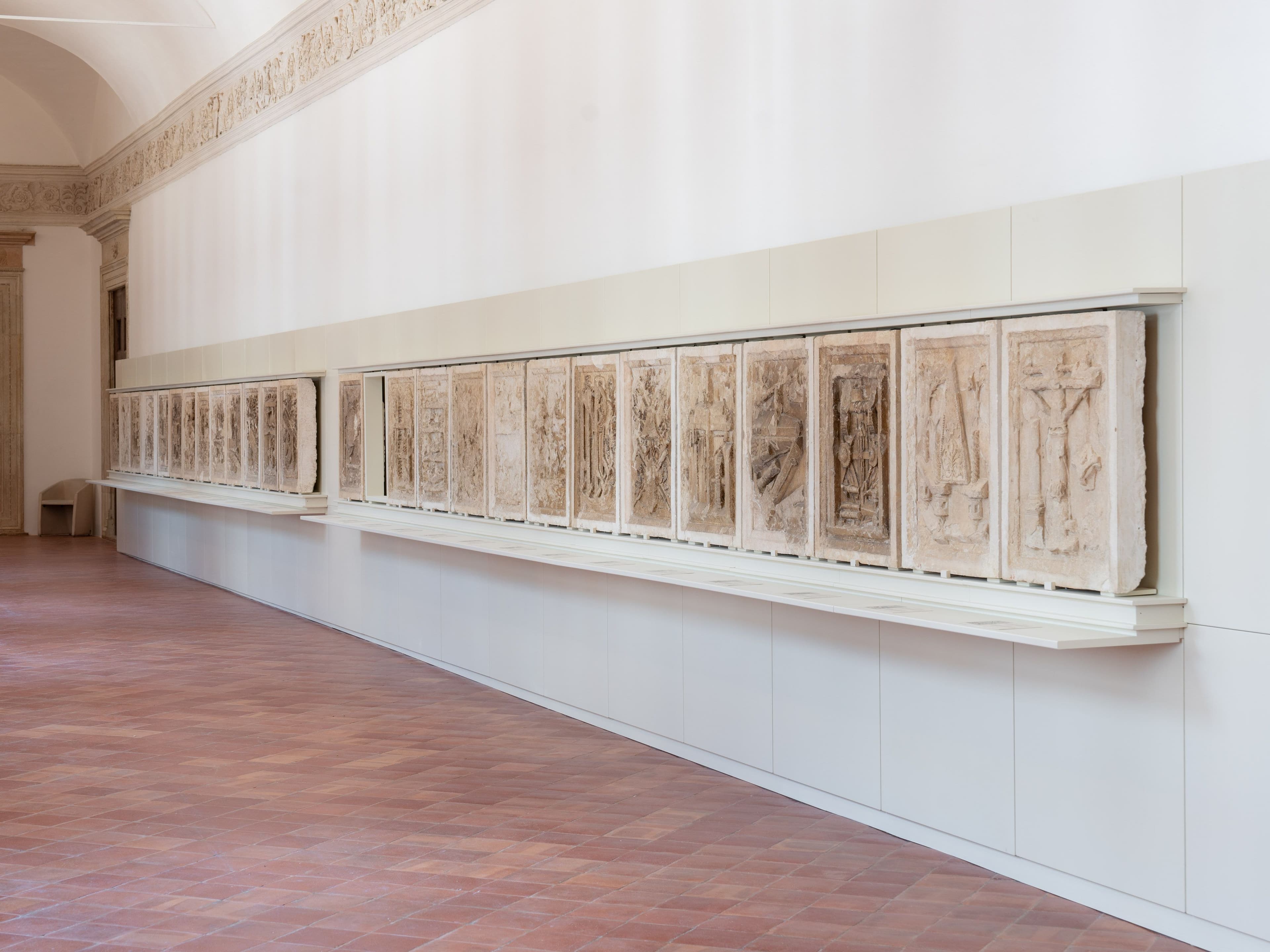
Around 1480, the ‘winged’ façade of the Ducal Palace in Urbino was decorated with 72 stone bas-reliefs celebrating Federico da Montefeltro’s wide-ranging scientific interests and his military power. Perhaps they were originally polychrome, as Giorgio Vasari vaguely suggests in his biography of the Sienese architect Francesco di Giorgio, but this is not certain. In a highly detailed view of the Ducal Palace, engraved in 1724, the frieze can be seen alternating with the portals along the back of the main façade, from the side facing San Domenico to the corner with the Cathedral. Due to their outdoor location and exposure to the elements, the surface of the reliefs had deteriorated, and so in 1756 the Apostolic Legate Giovan Francesco Stoppani ordered that the panels be used to decorate the collection of Roman inscriptions mounted on the four sides of the loggias on the Piano Nobile, where they remained until the restoration work directed by Pasquale Rotondi in 1944, and where they were reinstalled in the summer of 2024.
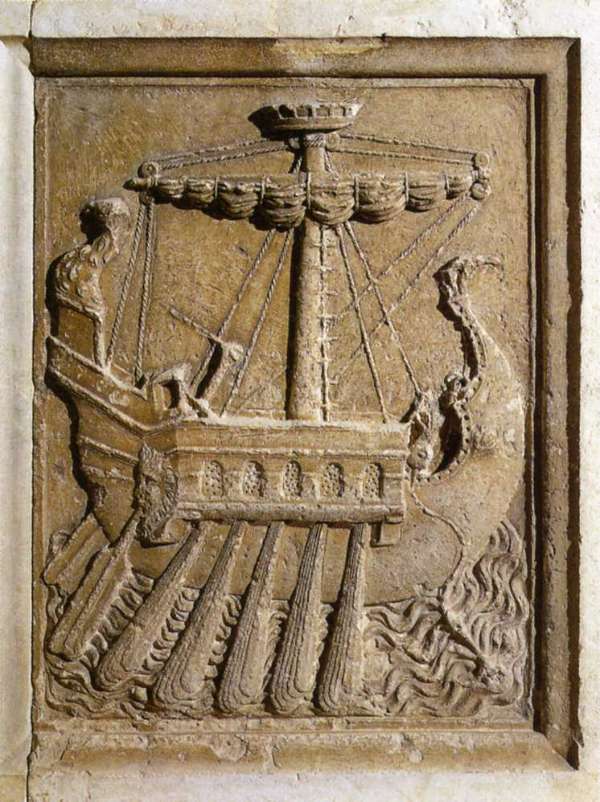
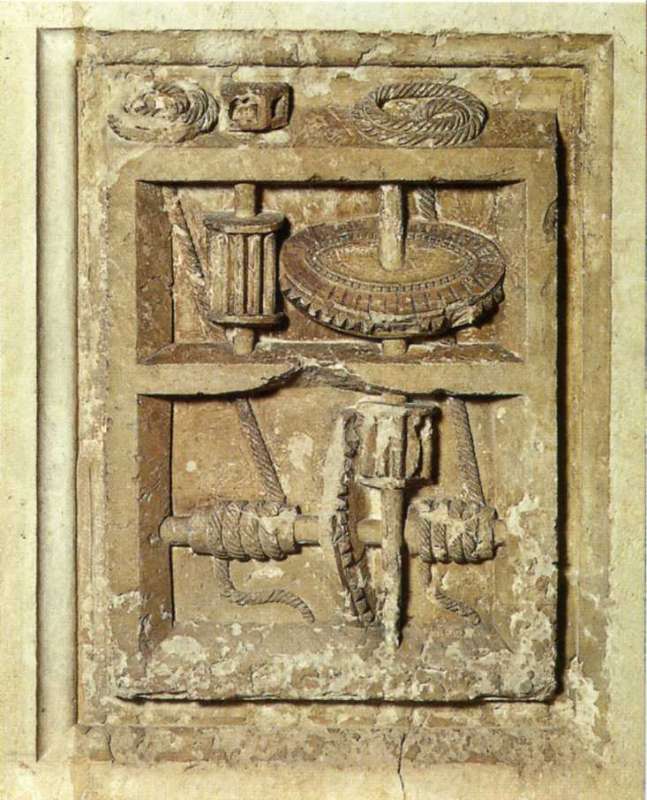
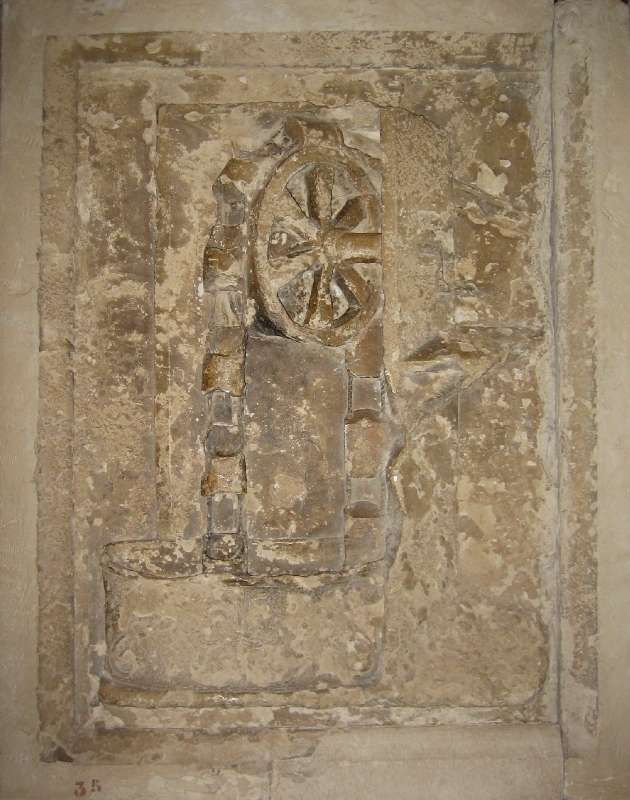
Duke Federico’s interest in the exact sciences had been translated into the panels as a programme to restore and modernise the machines of classical antiquity described by Vitruvius in Book X of De Architectura. Designs for acrobatic machines (projectile weapons), pneumatic machines (hydraulic devices) and traction machines (such as cranes, winches, etc.) alternate with military triumphs of offensive and defensive weapons, and examples of ancient and modern navigation, to highlight the technological avant-garde of the Lord of Urbino. Ambrogio Barocci, the sculptor responsible for much of the decoration of the portals, windows and fireplaces of the Ducal Palace, employed his workshop to translate into reliefs some designs for war machines by Roberto Valturio, of whom Federico da Montefeltro owned a volume in his extensive library (Urb. Lat. 281), as well as those by Francesco di Giorgio, the architect in charge of the Ducal Palace construction site following the departure of Luciano Laurana and a military engineer for the Montefeltro army.
Discover the works

You might also like
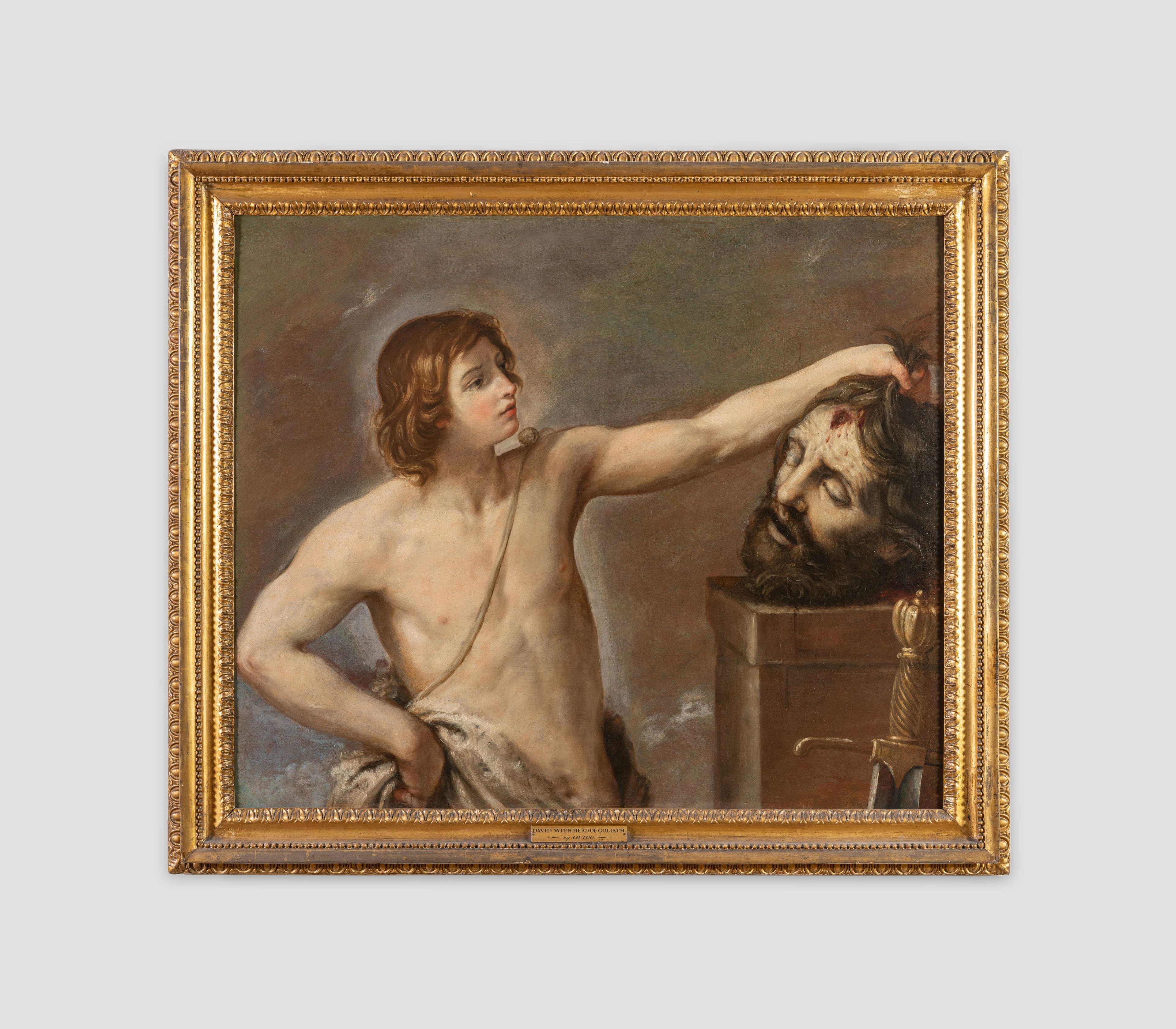
The Volponi Collection
Discover more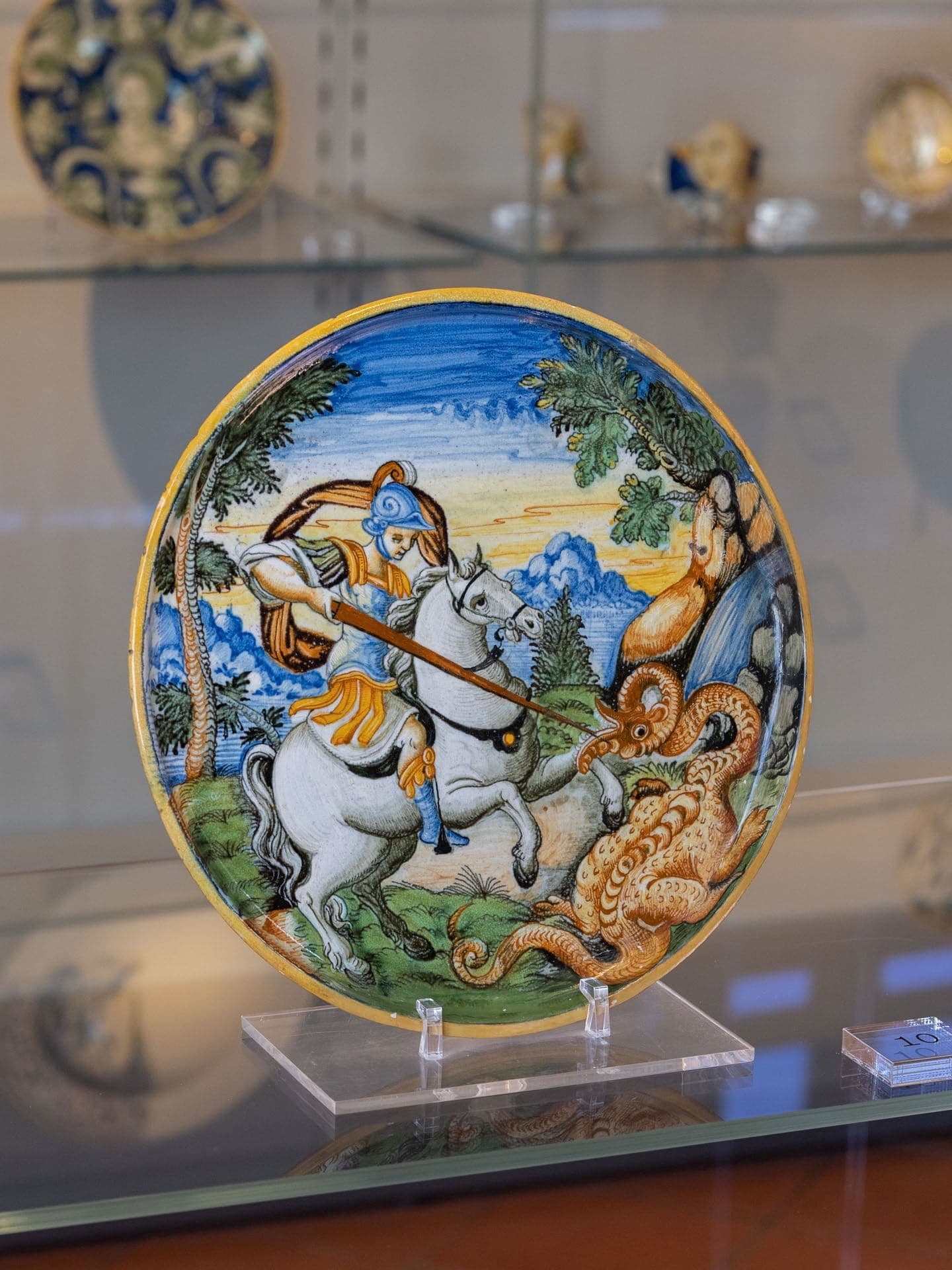
The majolica of the Galleria Nazionale delle Marche
Discover more
The Mauruzi Bequest
Discover more
The Prints and Drawings Collection of the Galleria Nazionale delle Marche
Discover more
The Viviani bequests
Discover more
The tapestries depicting the Acts of the Apostles by Raphael, formerly owned by Cardinal Mazarin
Discover more